The Peridot
Peridot: The Olive-Green Gemstone of August

Peridot is a gemstone instantly recognizable for its luminous olive-green color. This fine gem is the gem-quality variety of forsterite, a natural silicate composed of iron, magnesium and silica.
It is an idiochromatic gemstone, meaning its color comes directly from its chemical composition. Unlike gemstones such as tourmaline, which exist in a wide range of colors, peridot occurs exclusively in shades of green, from yellowish green to deep olive green.
Its remarkable transparency and natural brilliance make it highly appreciated in fine jewelry and high jewelry. Peridot is also known as the birthstone for the month of August, symbolizing vitality, light and prosperity.

Unlike most gemstones formed in the Earth's crust, peridot has a fascinating geological origin. It forms deep within the Earth’s mantle, often inside volcanic rocks rich in olivine.
During volcanic eruptions, these crystals can be brought closer to the surface. This deep origin explains the exceptional clarity of peridot, which typically contains few inclusions and displays excellent transparency.

The History of Peridot
The origin of the word peridot is uncertain. Some theories suggest it derives from the Latin word paederos, meaning “love,” while others trace it back to the Arabic word faridat, meaning “precious stone.”
The earliest known peridots date back more than 3,500 years. They were reportedly discovered on the volcanic island of Zabargad in the Red Sea, off the coast of Egypt. In ancient times, Egyptians sometimes referred to it as the “gem of the sun” because of its radiant glow.
Ancient civilizations also attributed protective properties to this stone. Egyptians used it to treat certain ailments, particularly those related to the liver. During the Middle Ages, the gemstone was sometimes considered an aphrodisiac and a symbol of love.
The Roman naturalist Pline the Elder described peridot as “a greenish, transparent stone of captivating beauty.”
Later, the gem also became associated with romance: Napoleon I is said to have gifted several peridot stones to Empress Joséphine.
Peridot Deposits Around the World
The historic Egyptian deposits on Zabargad are now largely exhausted. However, peridot is still mined in several parts of the world.
The most significant deposits are found in:
- Arizona (United States), currently one of the largest producers
- South Africa
- Saudi Arabia
- Australia
- Myanmar / Burma
- China
In Hawaii, some volcanic beaches contain tiny peridot crystals naturally polished by the ocean, creating spectacular landscapes.

Peridot in Jewelry
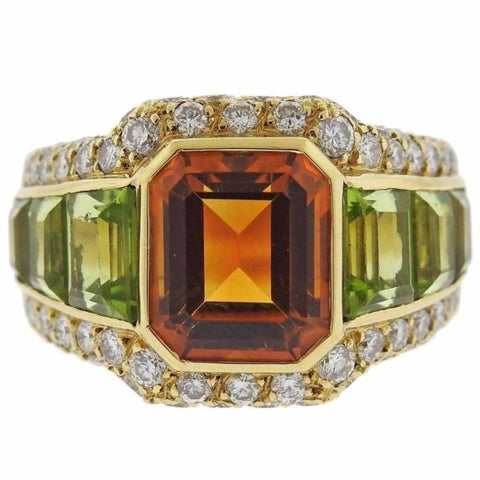
Thanks to its bright green color, transparency and natural brilliance, peridot is widely used in jewelry. It pairs particularly well with yellow gold, which enhances its green and golden reflections.
Many prestigious jewelry houses have incorporated this gemstone into their creations, including Van Cleef & Arpels, Dior, Bulgari, Chaumet and Boucheron.
Peridot has a hardness of 6.5 to 7 on the Mohs scale, making it suitable for a variety of jewelry pieces such as rings, pendants, earrings and bracelets.

Discover Peridot with Les Pierres de Julie
If you are interested in peridot gemstones, we invite you to discover our selection of jewelry and loose stones available in our boutique.
We also offer a free jewelry appraisal for your peridot pieces. Simply send photos to: contact@lespierresdejulie.com.
Whether you're interested in buying a piece of jewellery or a stone, a free jewelry appraisal or jewelry resale, Pierres de Julie welcomes you to its Parisian boutique in the Village Suisse, a stone's throw from the Ecole Militaire and the Esplanade des Invalides.
Nouveautés

- 2.600 €
- 2.600 €
- Unit price
- per

- 3.800 €
- 3.800 €
- Unit price
- per

- 9.000 €
- 9.000 €
- Unit price
- per

- 800 €
- 800 €
- Unit price
- per