Unheated Pink Sapphire : rough beauty and a safe investment
The pink sapphire is undoubtedly one of the least well-known gemstones among the general public, and yet one of the most beautiful. Belonging to the corundum family, just like its blue sapphire counterpart, this pink corundum comes in a range of shades—from soft baby pink to deep pink verging on ruby—making it a gemstone in its own right. Behind this natural beauty lies a major gemological distinction: that which separates a heated pink sapphire from an unheated sapphire. This difference, invisible to the naked eye, can multiply its value two- or threefold. Why does the unheated pink sapphire fascinate collectors and investors so much ? This is what this article explores.
Pink sapphire, a gemstone of a thousand shades
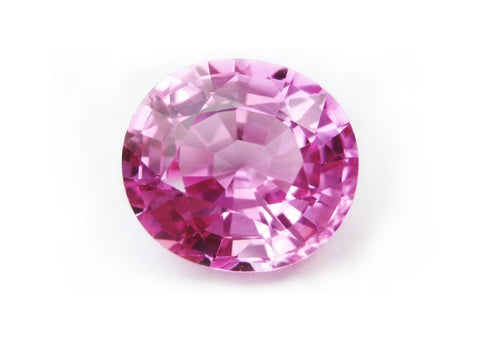
A corundum born from the chemistry of the Earth
Pink sapphire is a corundum, meaning a crystalline form of aluminum oxide (Al₂O₃). Its color (from the softest powder pink to vivid fuchsia) depends directly on its chromium content. The higher the chromium concentration, the more intense—sometimes even red—the hue becomes, approaching the boundary with ruby, which is also a corundum. This boundary is, in fact, difficult to define precisely: at what level of color saturation does a pink corundum become a ruby ? The question remains debated within the international gemological community.
With a hardness of 9 on the Mohs scale, pink sapphire is one of the most durable gemstones after diamond. Its robustness makes it an excellent choice for everyday jewelry: engagement rings, pendants, earrings, or collectible bracelets. Its refractive index (between 1.762 and 1.770) gives it an adamantine luster and natural brilliance that softer gemstones struggle to match.
Madagascar, Sri Lanka, Mozambique: origins that make a difference
Pink sapphires come from a handful of well-identified deposits: Madagascar, Sri Lanka (Ceylon), Mozambique, Burma (Myanmar), Tanzania, and Kenya. Each origin carries its own signature. Pink sapphires from Madagascar are renowned for the depth of their color and the quality of their crystallization, while those from Sri Lanka (accounting for around 15% of global production) are distinguished by their clarity and range of hues.
The geographic origin of a gemstone is not merely a matter of exotic appeal—it directly affects its value. An unheated pink sapphire from Ceylon or Burma, supported by certification, can command significantly higher prices than a comparable stone from a lesser-known source. Gemologists refer to this as an origin premium, a concept somewhat akin to terroir in viticulture.
Unheated pink sapphire: what does the term "no heat" really mean ?
Heat treatment: an ancient and widely accepted practice
More than 90% of sapphires sold on the market have undergone heat treatment. This practice, dating back to antiquity, involves subjecting the stone to temperatures of up to 1,800°C in a specialized furnace. The goal is to enhance color and reduce visible inclusions, particularly in stones whose natural hue is too pale or too dark for jewelry standards. Heat treatment is fully accepted across the industry and by leading organizations such as the CIBJO. It is clearly disclosed in laboratory reports. A heated sapphire remains a fully natural gemstone, and this point is worth emphasizing.
Why are unheated sapphires so rare and valuable?
An unheated pink sapphire is a stone whose color and clarity are entirely natural, with no post-extraction intervention. It has not undergone thermal enhancement, beryllium diffusion, or HPHT treatment. Nature alone is responsible.
It is extremely rare for a pink sapphire to naturally display strong color intensity, even color distribution, and sufficient clarity to be set in jewelry without any enhancement. High-quality unheated pink sapphires are, according to gemologists, even rarer than their blue counterparts. This rarity directly impacts price: an unheated stone can be worth two to three times more than a treated sapphire with similar characteristics—same weight, cut, and color intensity.
How to identify and certify an unheated pink sapphire?

Gemological analysis: the only reliable method
To the naked eye (or even under 10x magnification), it is impossible to distinguish a heated pink sapphire from an unheated one. Only a professional gemologist equipped with a gemological microscope, spectrophotometer, refractometer, and analytical tools such as EDXRF spectroscopy can determine with certainty whether a stone has been heat treated. The spectral signature of an unheated sapphire is unique: fluid and solid inclusions, rutile silk, and spectroscopic properties provide clues that heat cannot erase, though it may alter them in ways recognizable to experts.
Any purchase of an unheated pink sapphire should be accompanied by a gemological certificate issued by an independent and recognized laboratory. This report is the stone’s true passport: it certifies geographic origin, the presence or absence of heat treatment, carat weight, cut, clarity, and the nature of any inclusions. Without such documentation, any claim regarding the stone’s unheated nature remains unverifiable.
GIA, SSEF, GRS: laboratories you can trust
Not all laboratories are equal, and the gemstone market is not immune to fake certificates. For a valuable unheated pink sapphire, reports issued by the following organizations are considered authoritative on the international market:
GIA (Gemological Institute of America): the global reference, known for its rigorous standards and impartiality.
SSEF (Swiss Gemmological Institute): based in Basel, highly respected for its expertise in high-value corundum.
Gübelin Gem Lab: a historic Swiss laboratory, renowned for analyzing sapphires from Burma or Kashmir.
GRS (Gem Research Swisslab): appreciated by collectors and gemstone dealers for its detailed origin reports.
Gem Paris: a Paris-based laboratory recognized for its expertise, particularly among Place Vendôme jewelry houses.
Carat Gem Lab: another Paris laboratory whose certificates often accompany exceptional stones at auction.
A certificate from one of these laboratories is the minimum requirement for purchasing an unheated stone worth more than a few hundred euros.
Pink sapphire, ruby, and pink diamond: how to avoid confusion?
Confusion between pink sapphire and ruby is the most common. Both stones share the exact same chemical composition and coloring agent (chromium). The difference lies solely in the degree of red saturation: below a certain threshold, the corundum is classified as pink sapphire; beyond it, it becomes ruby. This boundary remains subjective, and some stones receive different classifications depending on the laboratory.
Other pink gemstones can also cause confusion: pink tourmaline, with a Mohs hardness of 7 to 7.5—significantly lower than sapphire—morganite (a pink beryl with a different composition), or pink spinel, which was long mistaken for ruby. The famous "Black Prince’s Ruby" set in the British Crown is actually a spinel. Among all these alternatives, the unheated pink sapphire stands out for its durability and resale value. And unlike pink diamonds, now out of reach for most buyers, pink sapphire still offers opportunities at accessible prices, with documented appreciation potential.

Pink sapphire in vintage jewelry and as an investment asset
A gemstone that transcends styles and eras
Pink sapphire has always held a special place in fine jewelry. Major houses such as Cartier, Van Cleef & Arpels, and Boucheron have regularly featured pink sapphires in their most remarkable creations. In Art Deco or Belle Époque pieces, it is often found in old cut or rose cut, set in platinum with finely detailed millegrain finishes. These antique jewels, when featuring a documented unheated pink sapphire, can achieve very high estimates at auctions held by Christie’s, Sotheby’s, or at Hôtel Drouot. Provenance, hallmark authenticity, and gemological reports are the three elements that elevate a beautiful stone into an exceptional lot.
AtLes Pierres de Julie, a boutique specializing in antique jewelry located in the Village Suisse in Paris, the selection of sapphires and certified jewelry reflects this tradition of quality and traceability.
The "no heat" premium and signs of a rising market
From an investment perspective, certified unheated pink sapphire is increasingly seen as a serious tangible asset. The gradual depletion of deposits in Madagascar and Sri Lanka, combined with growing international demand (particularly in Asia, where pink symbolizes prosperity), is putting upward pressure on prices. The "no heat" premium is real and well documented: it can represent between 50% and 200% more than a treated sapphire of similar quality, depending on origin and carat weight.
For those looking to diversify their portfolio with alternative assets, certified unheated colored gemstones represent one of the few markets where structural demand remains strong over the long term. Traceability and certification form the essential foundation of a value-preserving purchase. Without them, even the most beautiful stone remains just a beautiful story without guarantees.
The unheated pink sapphire is far more than a pretty gem: it is a stone whose value rests on precise, verifiable, and documented criteria. Whether for an engagement ring, a collector’s piece, or a considered investment, this natural pink corundum deserves the full attention of an informed buyer.
At Les Pierres de Julie, in the Village Suisse in Paris, just steps from the École Militaire and the Esplanade des Invalides, you will find a selection of antique jewelry and certified gemstones. For a free appraisal of your pink sapphire, send your photos to contact@lespierresdejulie.com , and we will be delighted to assist you.
Nouveautés

- 35.000 €
45.000 €- 35.000 €
- Unit price
- per

- 1.500 €
- 1.500 €
- Unit price
- per

- 3.900 €
- 3.900 €
- Unit price
- per

- 4.900 €
- 4.900 €
- Unit price
- per